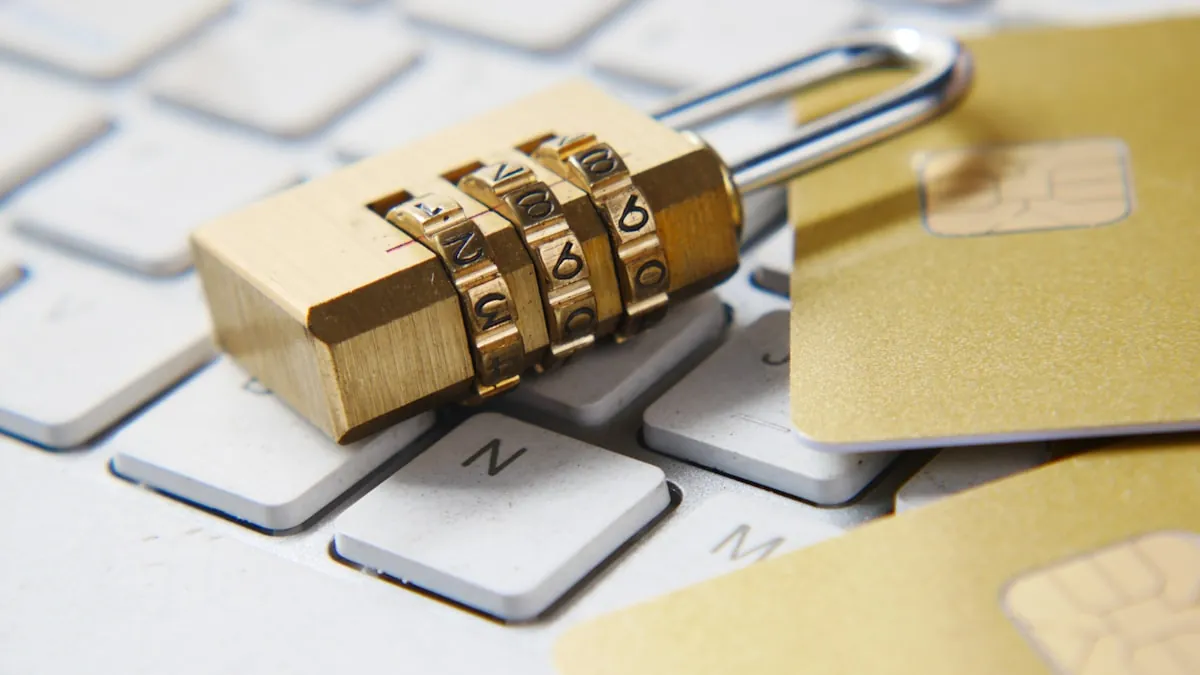
Picture this: you open your crypto wallet and the screen asks for 12 words you wrote down years ago. You check the drawer, the safe, your email. Nothing. Your digital assets might be one lost seed phrase away from becoming permanently inaccessible.
This is not a hypothetical scenario. It is the reality for millions of people who trusted a piece of paper to protect what they built.
Why so many people lose their crypto wallet seed phrase
A seed phrase (or recovery phrase) is a sequence of 12 or 24 words generated when you create a self-custody wallet. It serves as the sole recovery mechanism for your private key. If you lose those words, you lose access. Permanently.
The problem is not the technology itself. It is the mental model it imposes. You must write words on paper, store them securely, never photograph them, never save them digitally. A ritual that works in theory but collides with real life.
People move houses. Papers get tossed during cleanups. Safes are forgotten. Fires happen. In each of those scenarios, the seed phrase vanishes alongside everything else.
How much money has been lost to missing seed phrases
The numbers are uncomfortable. Chainalysis estimates that roughly 20% of all Bitcoin in circulation sits in inaccessible wallets. That is approximately 3.7 million BTC that nobody can move.
Glassnode has documented that wallets dormant for more than five years hold significant volumes of locked digital assets. A considerable share of those losses ties directly to seed phrases that were lost or damaged.
The real cost of a lost seed phrase
In 2024, River Financial reported that individual investors lost access to an estimated USD 100 billion to USD 140 billion in Bitcoin. The majority of cases involved seed phrases written on paper that were destroyed, misplaced, or simply forgotten.
This is not just about careless early adopters. Organized, meticulous people lose access too. The seed phrase is a single point of failure disguised as a security mechanism.
What is MPC and why it eliminates the dependency on a seed phrase
MPC stands for Multi-Party Computation. It is a branch of cryptography that allows multiple parties to jointly compute a function over their private inputs without any party revealing its individual data to the others.
In the context of crypto wallets, MPC splits your private key into multiple pieces called "shares" or fragments. Each fragment is stored in a different location. No single fragment can sign a transaction or reconstruct the complete key.
To authorize a transaction, the fragments participate in a joint cryptographic protocol. They produce a valid signature without the full private key ever being reassembled at any single point in the process. This is fundamentally different from splitting a password into pieces. With MPC, the complete key literally never exists in one place.
The seed phrase exists, but you do not need to depend on it
At Chainless, a seed phrase is generated during wallet creation. You can export it at any time from the app settings if you want full manual control over your keys. The difference is that account recovery does not depend on those words. Social login (Google or Apple via Web3Auth) handles that process.
How MPC differs from multisig
Multisig (multiple signatures) requires several independent private keys to sign a transaction. Each key is complete and needs secure storage. If you use a 2-of-3 scheme, you have three complete keys to protect, each with its own seed phrase.
MPC, on the other hand, works with fragments of a single key. No fragment is a valid key on its own. There are no multiple seed phrases because there are no multiple keys. There is one key that never materializes in its entirety.
"The question was never whether people would lose seed phrases. The question is how many will lose them before we admit the model is broken."
How crypto wallet recovery works without depending on a seed phrase
MPC-based recovery replaces "write down 12 words" with social login authentication. Here is how the process works at Chainless:
1. Wallet creation: When you open your account via social login (Google or Apple), the MPC protocol automatically generates distributed key fragments. One fragment stays on your device, another on Chainless secure servers, and a third with an independent backup provider. A seed phrase is generated and available for export, but you do not need to write it down or manage it to use the app.
2. Daily use: To sign transactions, the fragments collaborate through the cryptographic protocol. The complete key is never reassembled. You authorize operations with biometrics (Face ID, fingerprint) or PIN on your device, which serves as a local security layer.
3. Recovery: If you lose your device, you install the app on a new one. You sign in with the same Google or Apple account used at creation. Web3Auth validates your identity, and the fragments stored on secure servers generate a new fragment on the new device. Access is restored. Your digital assets remain intact.
Fragments, not copies
During recovery, the system does not "copy" the old fragment to the new device. It executes a re-sharing protocol that generates new valid fragments, invalidating the previous ones. This means that even if someone finds your old phone, the fragment stored on it is already worthless.
Are self-custody and recovery without depending on a seed phrase compatible?
This is the question many crypto purists ask. If a server is involved in recovery, does that compromise self-custody?
The short answer: no. The reason is that no single server controls your funds.
Self-custody means no third-party entity holds unilateral power over your digital assets. In the Chainless MPC model, servers store fragments that are useless in isolation. Chainless cannot move your funds without your active participation. You cannot be censored, blocked, or have assets frozen by a unilateral decision.
Compare this with the traditional seed phrase model: if someone finds your 12 words, they have total control. With MPC, finding a single fragment grants nothing. The security asymmetry favors the distributed model.
What separates MPC self-custody from centralized custody
In centralized custody (exchanges, for example), a company controls your keys. It can block withdrawals, freeze accounts, or simply go insolvent. You depend on the solvency and good faith of a third party.
In MPC self-custody, no individual participant controls the key. Not you alone, not Chainless alone, not the backup provider alone. Control requires cooperation, but the initiative is always yours. It is a model that preserves sovereignty without requiring you to become your own security department.
Risks and limitations of recovery without depending on a seed phrase
It would be dishonest to present MPC as a solution without trade-offs. Every security architecture involves compromises. Here are the main ones:
Infrastructure dependency: If all servers storing fragments become unavailable simultaneously, recovery could be compromised. Chainless mitigates this with fragments distributed across independent, geographically separated infrastructure providers. Additionally, the exportable seed phrase serves as a safety net: if you choose to save it, you have an independent recovery route.
Protocol complexity: MPC is advanced cryptography. Bugs in the protocol can have serious consequences. Chainless uses implementations audited by specialized security firms and maintains bug bounty programs.
Distributed trust model: You need to trust that the servers storing fragments will not be compromised simultaneously. It is a trust model, but distributed across multiple independent entities. Unlike trusting a single company, you trust a cryptographic scheme where collusion among all participants would be necessary to compromise your funds.
"Self-custody should not mean you need to be an information security specialist. It should mean that nobody besides you decides what happens to your assets."
Is social login more secure than a seed phrase for recovery?
A direct comparison reveals important patterns:
Seed phrase: Static. Never changes. If compromised once, compromised forever. It can be photographed, copied, read over your shoulder. Security depends entirely on human behavior.
Social login + MPC: Dynamic. Fragments can be rotated (re-sharing) without changing the public key or wallet address. Social login is protected by the security of your Google or Apple account, including two-factor authentication. Even if someone knows your email, they cannot gain access without your Google or Apple account verification.
Biometrics (Face ID, fingerprint) serve as an additional security layer on the device, controlling access to the app. But account recovery itself happens via social login, not through biometrics.
No system is infallible. But the probability of loss through social login compromise (protected by Google/Apple 2FA) is dramatically lower than the probability of loss through a misplaced seed phrase. The Chainalysis numbers confirm this.
Fragment rotation
The MPC protocol supports "proactive refresh": fragments are periodically replaced by new, mathematically equivalent fragments. This means that even if an old fragment is intercepted, it has already been invalidated. Seed phrases offer nothing equivalent.
Step by step to recover your wallet on Chainless
If you lost your device or need to migrate to a new one, the process is straightforward:
- Download the Chainless app on your new device from the App Store or Google Play.
- Select "Recover account" on the welcome screen.
- Sign in with Google or Apple, using the same account used when you created the wallet. Web3Auth validates your identity.
- Wait for recombination. The MPC fragments on secure servers generate a new fragment for your device. The process takes seconds.
- Access your assets. Your wallet is restored with all assets and full transaction history intact.
No words to type. No codes to remember. No paper to find.
How to protect digital assets without depending on paper
The seed phrase was a brilliant solution for 2009. It gave autonomy to people who did not trust financial institutions. But the crypto world grew, and the profile of participants changed.
Today, digital assets are not just for cypherpunks running full nodes in the basement. They are for people who want sovereignty over their assets without turning their lives into an exercise in operational paranoia.
MPC is not the only alternative to depending on a seed phrase. There are approaches like social recovery (where trusted contacts help with restoration) and smart contract wallets (where recovery logic is programmed on-chain). Each has merits and limitations.
What sets the Chainless approach apart is the combination of MPC with social login in a product that requires no technical knowledge. The seed phrase exists and can be exported for those who want full manual control. But for day-to-day use, social login handles recovery. You maintain self-custody, you maintain sovereignty over your assets, and you do not need to worry about scraps of paper.
Your assets grow. Your keys stay yours. And no forgotten drawer can change that.
Recovery with social login. Self-custody without fear.
Chainless uses MPC and social login so you never need to depend on 12 words written on paper. Your seed phrase exists and can be exported, but recovery happens through your Google or Apple account. Your digital assets stay yours, without depending on seed phrases.
See how it worksPerguntas frequentes
Can you recover a crypto wallet without depending on a seed phrase?
Yes. Wallets using MPC (multi-party computation) split the private key into distributed fragments. Chainless combines those fragments with social login (Google or Apple via Web3Auth) to restore access without requiring you to have stored a seed phrase.
Is recovery without depending on a seed phrase secure?
Yes. Key fragments are stored on independent, encrypted servers. No single fragment is useful alone. Recombination requires authentication via the account holder's social login, making the process more resilient than depending on 12 words written on paper.
What happens if I lose my phone with Chainless?
You install the app on a new device, sign in with your Google or Apple account, and the MPC fragments are recombined automatically. Your digital assets remain intact, with no recovery words to type.
Does a seed phrase exist in Chainless?
Yes. A seed phrase is generated during wallet creation and can be exported at any time for full manual control. The difference is that you do not need to depend on it for account recovery. Social login (Google or Apple) handles the recovery process.